Introduction
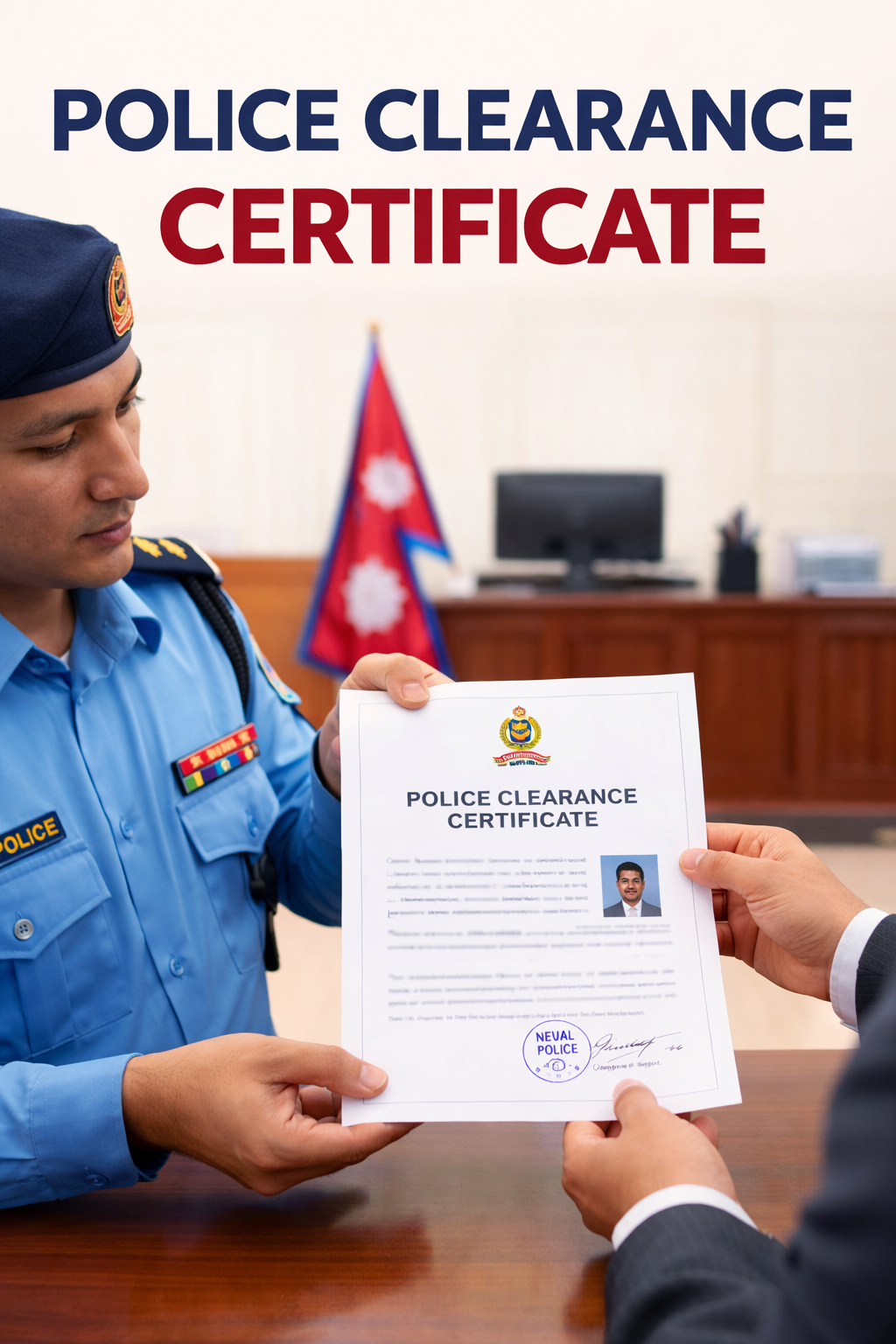
A Police Clearance Certificate (PCC) in Nepal, also known as a Police Report, is an official document issued by the Nepal Police confirming whether an individual has a criminal record in Nepal. It is a crucial requirement for foreign employment, visa applications, immigration, international education, and legal proceedings.
With increasing global mobility, obtaining a Nepal Police Clearance Certificate has become an essential step for individuals seeking opportunities abroad. This guide provides a complete overview of the PCC process in Nepal, eligibility, required documents, fees, and processing time.
What is a Police Clearance Certificate (PCC)?
A Police Clearance Certificate is an official verification document that certifies whether a person has any criminal history or confirms a clean record. It is issued after background verification by the Nepal Police authorities.
The PCC serves as proof of an individual’s legal standing and is widely accepted by foreign governments, embassies, employers, and educational institutions.
Purpose of PCC in Nepal
A PCC is required for multiple international and legal purposes, including:
- Employment Abroad
Foreign employers require a PCC to ensure candidates have no criminal background.
- Visa & Immigration
Mandatory for:
- Work visas
- Permanent residency (PR)
- Citizenship applications
- International Education
Students applying to foreign universities and scholarships often need a PCC.
- Legal and Administrative Use
Required in:
- Adoption cases
- Court proceedings
- Government verifications
Validity of Police Clearance Certificate
A PCC in Nepal is generally valid for 3 to 6 months, depending on the requirements of the requesting authority. Most embassies require a recently issued PCC.
Who Needs a PCC in Nepal?
You may need a Police Clearance Certificate if you are:
- Applying for jobs abroad
- Processing visa or immigration applications
- Seeking admission to foreign universities
- Involved in legal proceedings requiring background verification
Foreign nationals who have resided in Nepal for a significant period may also be required to obtain a PCC.
Eligibility for PCC in Nepal
To apply for a Police Clearance Certificate in Nepal, the applicant must meet the following criteria:
Citizenship & Legal Status
- Nepali citizens with a valid citizenship certificate
- Foreign nationals with a valid visa and legal stay in Nepal
Legal Requirement
- No pending criminal cases or unresolved legal matters
Age Requirement
- Must be 16 years or older
- Minors must apply through parents or legal guardians
Documents Required for PCC in Nepal
Applicants must prepare the following documents:
For Nepali Citizens:
- Citizenship certificate (mandatory)
- Passport (for international use)
- Recent passport-sized photographs
- Completed application form
- Purpose statement (reason for PCC)
- Proof of address
For Foreign Nationals:
- Passport copy with visa details
- Proof of stay in Nepal
- Work permit (if applicable)
- Supporting documents (job offer, admission letter, etc.)
Important: All documents must be consistent (name, date of birth, address). Any discrepancy may delay the process.
Online Process for Police Clearance Certificate in Nepal
Nepal Police has introduced a convenient online system for PCC applications.
Step 1: Visit Online Portal
Apply through the official PCC portal of Nepal Police.
Step 2: Create an Account
Register using:
- Valid email address
- Mobile number
- Secure password
Step 3: Fill Application Form
Provide:
- Full name (as per citizenship/passport)
- Citizenship number
- Address details
- Purpose of PCC
Step 4: Upload Documents
- Upload scanned copies (PDF/JPEG):
- Citizenship or passport
- Photograph
- Proof of residence
- Supporting documents
Step 5: Submit & Track Application:
After submission, applicants can track their application status online (Processing / Approved / Rejected).
Step 6: Download PCC:
Once approved, the PCC is available as a digitally signed certificate.
Offline Process for PCC in Nepal
Applicants can also apply through the traditional method:
- Visit the nearest police office
- Collect and fill out the application form
- Submit required documents
- Pay applicable fees
- Wait for background verification
- Collect the PCC upon approval
Processing Time for PCC in Nepal
|
Application Method |
Processing Time |
|
Online |
7–15 working days |
|
Offline |
2–4 weeks |
Processing time may vary depending on document verification and application volume.
Fees are subject to change and are generally non-refundable.
Common Challenges in PCC Application
Applicants may face delays due to:
- Name or date-of-birth mismatches
- Incomplete documentation
- High seasonal demand (visa/education periods)
Tip: Always double-check documents and apply early.
Special Cases: PCC for Foreign Nationals
Foreign nationals who have lived in Nepal (typically more than 6 months) may require a PCC. In such cases, additional requirements may include:
- Proof of entry and exit stamps
- Detailed record of stay in Nepal
- Fingerprint verification through authorized agencies
- Application through the Criminal Investigation Department (CID)
Processing may take 2–3 weeks or longer depending on verification.
Importance of PCC in Nepal
Obtaining a Police Clearance Certificate is essential because it:
- Ensures compliance with international legal requirements
- Builds trust with employers and immigration authorities
- Facilitates smooth visa and job processing
- Confirms clean criminal record status
Conclusion
The Police Clearance Certificate in Nepal is a vital legal document for individuals planning to travel, work, or study abroad. With the introduction of online application systems, the process has become more efficient and accessible.
By understanding the PCC registration process, required documents, and eligibility criteria, applicants can avoid delays and ensure smooth processing.
Need assistance with Police Clearance Certificate (PCC) in Nepal?
Surya Law Firm Nepal provides professional legal support, documentation assistance, and end-to-end guidance for PCC applications, including cases involving foreign nationals and urgent processing.