Introduction
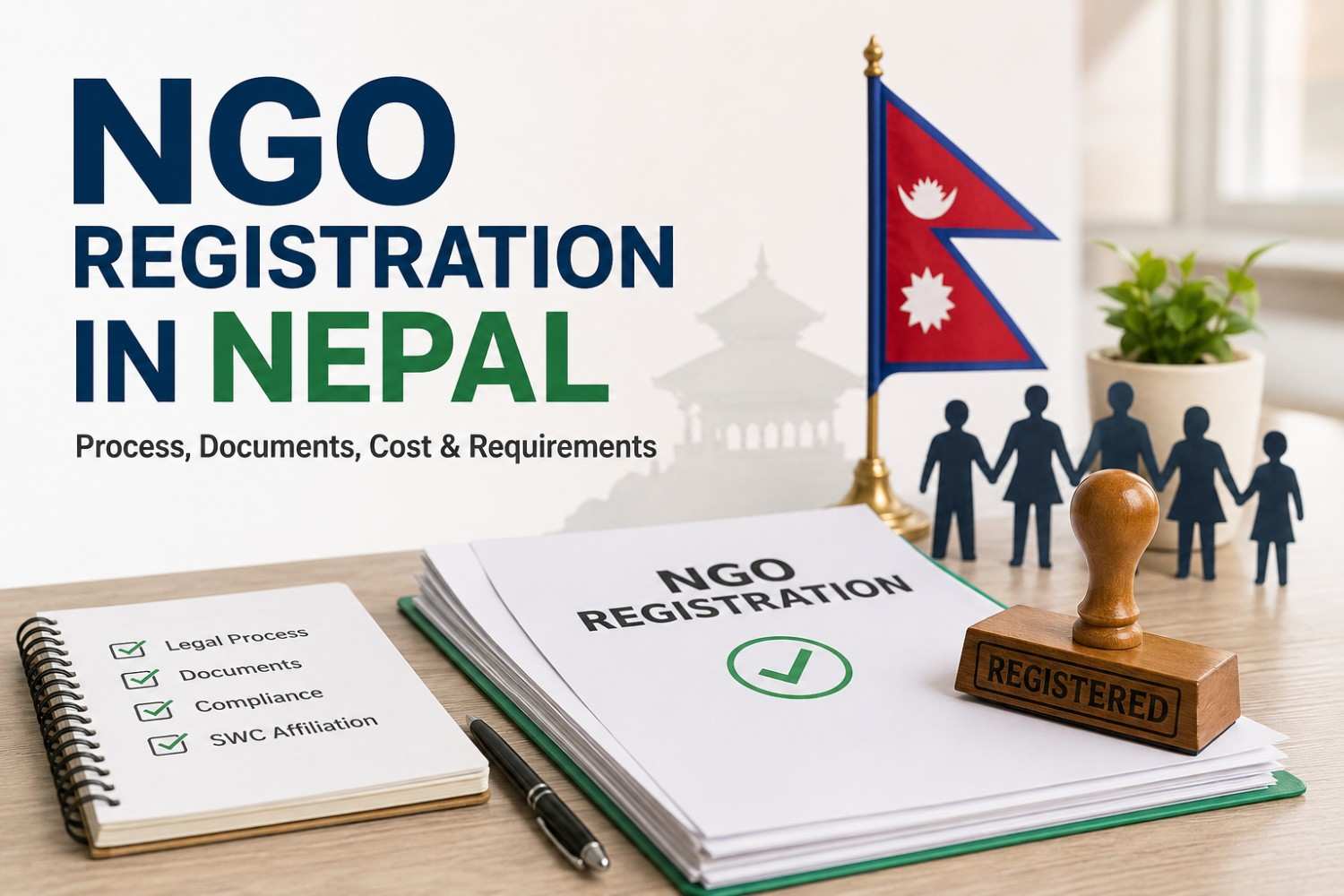
NGO registration in Nepal is the legal process of establishing a non-profit organization to carry out social welfare, humanitarian, educational, environmental, and community development activities. NGOs must be registered before they can operate legally, open bank accounts, receive donations, or enter agreements.
The process is governed mainly by the Associations Registration Act, 2034 (1977) and the Social Welfare Act, 2049 (1992). After registration at the District Administration Office, additional steps like PAN registration and Social Welfare Council affiliation may be required.
This article explains the complete NGO registration process in Nepal including laws, requirements, documents, cost, timeline, and compliance.
What is an NGO in Nepal?
A Non-Governmental Organization (NGO) is a non-profit entity established to serve public welfare. NGOs in Nepal work in:
- Education and awareness programs
- Health and sanitation
- Women and child development
- Human rights and legal support
- Environmental protection
- Disaster relief
- Community development
NGOs cannot distribute profit among members. All income must be used for organizational purposes only.
Laws Governing NGO Registration in Nepal
NGOs in Nepal are governed by:
- Associations Registration Act, 2034 (1977) – Primary law for NGO registration
- Social Welfare Act, 2049 (1992) – Governs SWC affiliation and NGO monitoring
- Social Welfare Council Guidelines – Regulates foreign funding and reporting
- Income Tax Act, 2058 (2002) – Covers PAN and tax obligations
Requirements for NGO Registration in Nepal
To register an NGO, the following conditions must be met:
- Minimum 7 Nepali citizens
- Minimum age: 18 years
- Executive committee formation (President, Secretary, Treasurer, etc.)
- NGO constitution (Bidhan)
- Office address and rent agreement
- Non-profit objectives clearly defined
NGO Registration Process in Nepal (Step-by-Step)
The process involves multiple government offices:
Step 1: Formation of Founding Members
A group of at least 7 members forms an ad-hoc committee and prepares the constitution and objectives.
Step 2: Recommendation from Ward Office
A recommendation letter is obtained from the local Ward Office verifying the office address and purpose.
Step 3: Registration at District Administration Office (DAO)
The NGO is officially registered at the DAO after document verification, and a registration certificate is issued.
Step 4: PAN Registration
The NGO must register at the Inland Revenue Department for PAN to handle financial transactions.
Step 5: Social Welfare Council Affiliation
NGOs working with foreign donors or large projects must obtain SWC affiliation.
Documents Required for NGO Registration
Personal Documents
- Citizenship certificates of all members
- Passport-size photos
- Police clearance certificate (if required)
Organizational Documents
- NGO constitution (Bidhan)
- Meeting minutes
- Application letter
Office Documents
- Rent agreement or ownership document
- Land tax receipt (if applicable)
- Property owner citizenship copy
Recommendation Documents
- Ward office recommendation
- DCC recommendation (if required)
NGO Registration Timeline in Nepal
NGO Registration Cost & Time Overview
| Stage | Authority | Time Required |
| Ward Recommendation | Local Ward Office | 1–2 days |
| NGO Registration | District Administration Office (DAO) | 2–5 days |
| PAN Registration | Inland Revenue Department | 1 day |
| SWC Affiliation | Social Welfare Council | 5–15 days |
| Total Process | Multiple Authorities | 2–5 weeks |
Compliance After NGO Registration
After registration, NGOs must follow legal compliance rules:
Annual Renewal
NGOs must renew registration at the DAO every year.
Accounting & Audit
Proper financial records and annual audits are mandatory.
Tax Compliance
PAN-based tax reporting must be maintained.
SWC Reporting
NGOs receiving foreign funding must submit reports to SWC.
Benefits of NGO Registration in Nepal
- Legal recognition and identity
- Ability to open bank accounts
- Eligibility for grants and donations
- Access to foreign funding (with SWC approval)
- Tax compliance advantages
- Increased credibility and trust
Conclusion
NGO registration in Nepal is a structured legal process involving DAO registration, PAN registration, and optional SWC affiliation. While the process involves multiple steps, proper documentation ensures smooth approval.
A registered NGO gains legal authority, funding opportunities, and long-term credibility for social impact work.
Frequently Asked Questions (FAQs)
How many members are required for NGO registration in Nepal?
A minimum of 7 Nepali citizens is required.
Where is NGO registered in Nepal?
At the District Administration Office (DAO).
How long does NGO registration take?
Usually 2 to 5 weeks.
Is PAN registration required?
Yes, it is mandatory for financial compliance.
Can NGOs receive foreign funding?
Yes, with SWC affiliation.
Disclaimer :
This article is provided solely for informational and educational purposes and should not be interpreted as legal advice or legal opinion.